
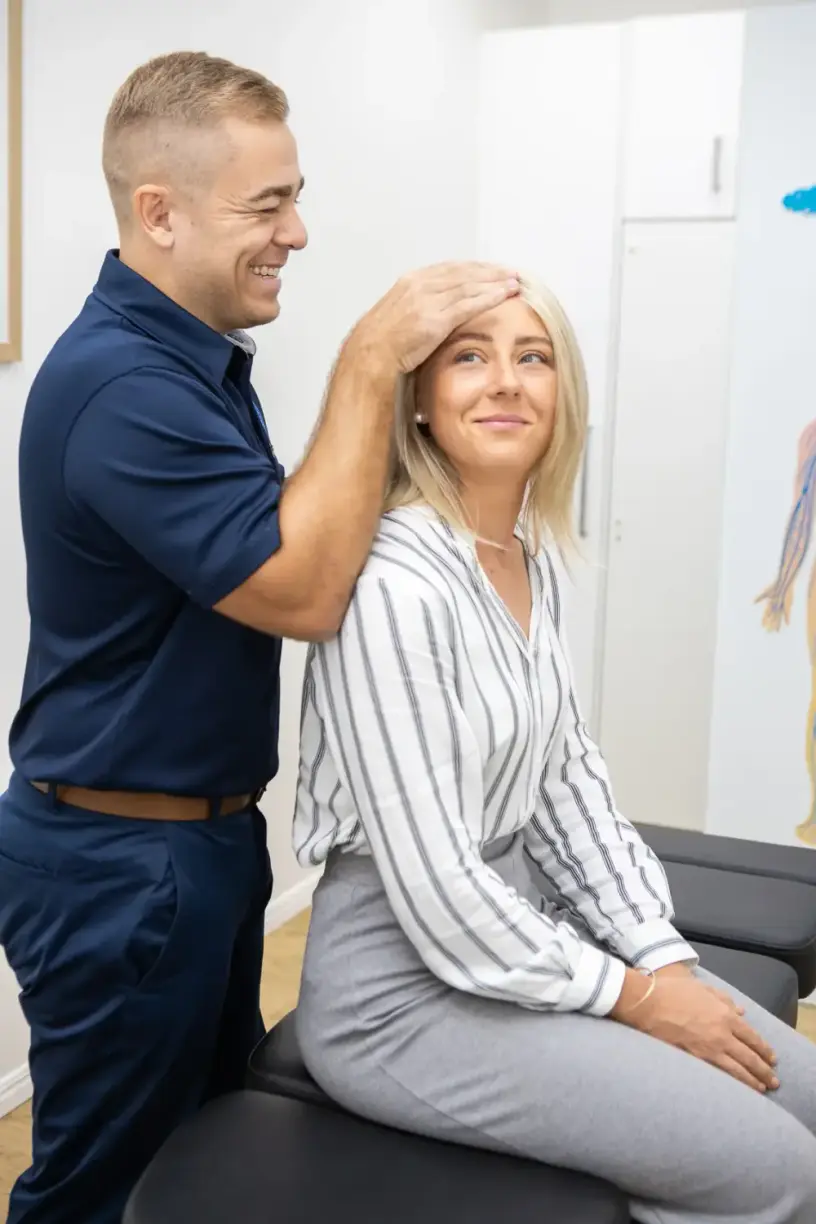
Headaches & Migraines
Tired of reaching for painkillers? Many headaches start in the neck — and that is something we can assess and address.
Understanding Headaches & Migraines
If you deal with regular headaches or migraines, you know how much they can take over your day — and how easy it is to feel like managing them with pain relief is your only option. But many headaches have a physical cause that can be assessed and addressed, particularly when the neck and upper back are involved.
Cervicogenic headaches — headaches that originate from dysfunction in the cervical spine — are one of the most commonly seen headache types in chiropractic practice. They typically cause pain at the base of the skull that spreads toward the forehead, temples, or behind the eyes, and are often accompanied by neck stiffness. They can be triggered or worsened by sustained postures: long hours at a desk, looking at a phone, driving, or sleeping in an awkward position.
Tension-type headaches are another common presentation, caused by chronic tightness in the muscles of the neck, upper back, and scalp — which creates a band-like pressure around the head. Both cervicogenic headaches and tension headaches can mimic migraines, and some people experience overlapping patterns. Migraines themselves are a distinct condition involving complex neurological changes, but when they have a strong cervical component — neck stiffness before or during the episode, headaches that are triggered by neck movements or posture — chiropractic care may help reduce their frequency and severity for some patients. We will always give you an honest assessment of what is likely driving your headaches and whether our care is likely to make a meaningful difference.
Common symptoms
- Recurring headaches at the base of the skull, temples, or forehead
- Pain that starts in the neck and travels upward — classic cervicogenic headache
- A band-like pressure around the head associated with neck or shoulder tension
- Headaches that build during desk work, screen use, or driving
- Migraines with or without visual disturbances (aura)
- Headaches triggered or worsened by specific neck movements or postures
- Neck stiffness that accompanies or precedes a headache
- Pain behind the eyes or across the forehead
How chiropractic may help
We assess your neck, upper back, and posture in detail — looking for the patterns of joint restriction and muscle tension that are most commonly associated with headache disorders. This takes time and matters: the right care for a cervicogenic headache is different from the right care for a tension headache, and both are different again from a migraine with a cervical component. Chiropractic care for headaches at Banora Chiropractic typically includes cervical and upper thoracic adjustments to restore normal joint movement and reduce the tension placed on the surrounding structures, manual therapy to the suboccipital muscles at the base of the skull — a key contributor to many headache patterns, and guided stretching and strengthening exercises to support the neck between visits. We also spend time reviewing your posture, workstation, pillow, and daily habits, because the most sustained improvement in headache frequency usually comes from a combination of in-clinic care and small changes to the way you use your body each day.
What to expect at Banora Chiropractic
Your first appointment begins with a thorough history. We want to understand your headache pattern in detail — how often they occur, where the pain is, how long they last, what seems to trigger or worsen them, and how they have changed over time. We ask about any associated symptoms like nausea, light sensitivity, or visual changes, and we take note of any medications you are currently using. We then examine your neck, upper back, and posture. If your headaches appear to have a significant cervical or muscular component, we will explain this clearly and outline a care plan. Many patients with cervicogenic or tension-type headaches notice a reduction in frequency or intensity within the first two to four weeks of care. For migraines, the response is more variable — but where there is a strong neck component, meaningful improvement is often achievable. We track your headache frequency and severity over time so we can assess whether care is helping and adjust our approach accordingly. We will also let you know if we think your headaches warrant investigation or referral to your GP or a neurologist.
Get Help With Headaches & Migraines
Book an assessment and let us help you understand what is going on.
Book Online Call (07) 5599 2322Related Services
Related Conditions
Frequently Asked Questions About Headaches & Migraines
More on headaches & migraines from our blog
Cervicogenic Headache: Causes, Symptoms, and How Chiropractic Care May Help
If your headaches seem to start in your neck or the base of your skull, you may be dealing with a cervicogenic headache. Here's what that means — and what may help.
Headache or Migraine? How to Tell the Difference (and What May Help)
Most of us know what a headache feels like — but migraines are something else entirely. Here's how to tell the two apart, and what might actually help.
Forward Head Posture: What It Is, Why It Matters, and Exercises That May Help
If your head sits forward of your shoulders, you've got forward head posture. It's becoming very common — and it's putting more load on your neck than you'd think.
Why Your Posture Matters More Than You Think
Posture isn't just about standing up straight — it affects your energy, your breathing, and how your whole body functions. Here's why it matters.
Headaches & Migraines care near you
Our clinic is at 2/44 Greenway Drive, Tweed Heads South NSW 2486. We see patients from across the Tweed Coast and southern Gold Coast, including:
Struggling with headaches & migraines?
You do not have to just put up with it. Book an assessment and let us help you understand your options.